The Red String of Shark Science: What AI Reveals About Conservation
Marine biologists are accustomed to putting satellite tags on sharks to track where the animals go. But what happens when we put a tracker on the scientists themselves to see where the research is going?
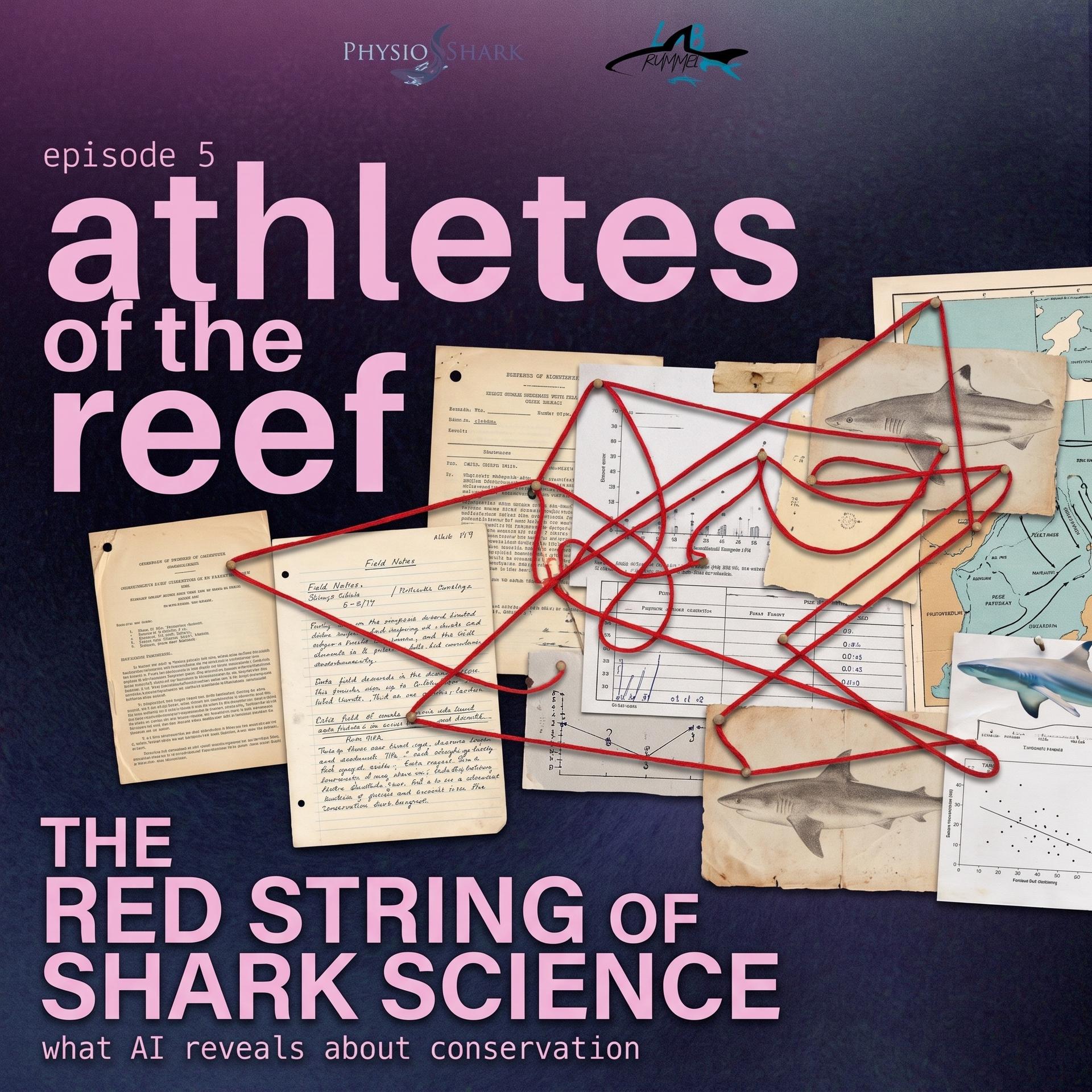
Imagine a detective’s corkboard covered in photographs, pushpins, and red string connecting all the clues. That is precisely what a new, massive collaborative meta-analysis has done for the field of marine biology. Recently published in the 2025 journal npj Ocean Sustainability, the paper "Opportunities to enhance conservation success for sharks" zooms out to evaluate decades of scientific literature. Led by Dr. Andrew J. Temple and co-authored by Dr. Jodie Rummer and a team of international colleagues, the study asks a critical question: Are we doing the right science to save our oceans' apex predators?
The stakes could not be higher. As the late Professor Dame Georgina Mace famously warned, we must bend the biodiversity-loss curve by 2030 or face an Anthropocene mass extinction. With over one-third of all shark and ray species currently threatened with extinction, ensuring that conservation research accurately targets the most pressing problems is a matter of global ecological security.
Mapping the Literature with Machine Learning
Historically, assessing the state of a scientific field involved a group of experts gathering a few hundred familiar papers and writing a review. However, this traditional method inherently introduces a priori bias, as scientists naturally focus on the disciplines and methodologies they know best.
To bypass this subjectivity, Dr. Temple and the research team employed an unsupervised machine learning approach. They fed a structural topic modeling algorithm the abstracts of 4,401 peer-reviewed scientific papers on shark conservation published over the last several decades. The algorithm—which knows nothing about marine biology and relies strictly on the mathematical patterns of word co-occurrence—cleaned the text and categorized the literature into 29 distinct research topics.
More importantly, the machine learning model measured the correlations between these topics. It built a virtual corkboard, using data as the "red string" to map exactly which subjects are frequently studied together, and which disciplines operate in total isolation.
The Conservation Nexus: Managing Human Behavior
When the researchers analyzed the final map, they discovered a beating heart at the center of the web. The AI revealed a "conservation nexus" composed of three massive, highly interconnected topics: Public Perceptions, Markets & Fisheries Management, and Extinction Risk & Protections.
Fascinatingly, the core of shark conservation science is not strictly biological—it is fundamentally socioeconomic. This nexus operates as a system of supply and demand. The "supply" of sharks is dictated by fisheries management and extinction risk protections, while the "demand" is driven by public perception and human-wildlife interactions. The ultimate goal of conservation science is to balance this equation.
The AI map demonstrated that public perception is tightly linked to ecotourism, shark attacks, and behavioral deterrence. For decades, the cultural narrative in Western nations was dominated by fear, heavily influenced by media like Jaws. Today, that dynamic is shifting. Negative perceptions are increasingly being replaced by positive exposures through ecotourism. When communities realize these animals are not mindless killers, the resulting shift in public sentiment generates the political will necessary to enact real conservation policies.
Another vital node within this nexus connects extinction risk to genetics. International regulations, such as the CITES appendices, govern the cross-border movement of endangered species. Because visually identifying a detached shark fin is nearly impossible for customs officials, misidentification has historically rendered fishery statistics useless. Today, high-resolution genetic barcoding acts as "CSI for the ocean," proving essential for identifying cryptic species and enforcing global trade restrictions.
The Missing Connections: Exposing Scientific Blind Spots
The AI’s analysis delivered incredibly positive news regarding the field's momentum. The cumulative number of shark conservation publications grew by over 250 percent in the last decade alone, becoming increasingly interdisciplinary. However, while the algorithm highlighted strong collaborations, it also exposed glaring, negative correlations. It found the missing red strings.
One of the most concerning disconnects is the near-total decoupling of Movement Ecology and Population Structure. Biologically, the demographic makeup of shark subpopulations is entirely dictated by movement. Sharks undergo ontogenetic shifts—where juveniles grow in coastal nurseries before moving offshore as adults—and exhibit sexual segregation, where males and females inhabit entirely different geographic areas.
Designing spatial management plans, like Marine Protected Areas, is effectively useless if a species regularly migrates beyond those invisible borders. Yet, the data indicates that the scientists tracking shark movements and the geneticists mapping population structures are rarely synthesizing their findings for targeted, holistic analyses.
The Invisible Toll: Physiology and Synergistic Threats
A particularly critical blind spot emerged surrounding shark physiology. The AI revealed that Stress & Physiology and Ecotoxicology were completely isolated from core life-history topics like Growth, Reproduction, and Sexual Dimorphism.
Ecotoxicology is rapidly growing, largely driven by human health concerns regarding contaminated shark meat. But heavy metals and pollutants do more than impact human consumers—they induce massive sublethal stress on the sharks themselves, inhibiting growth and disrupting reproductive cycles.
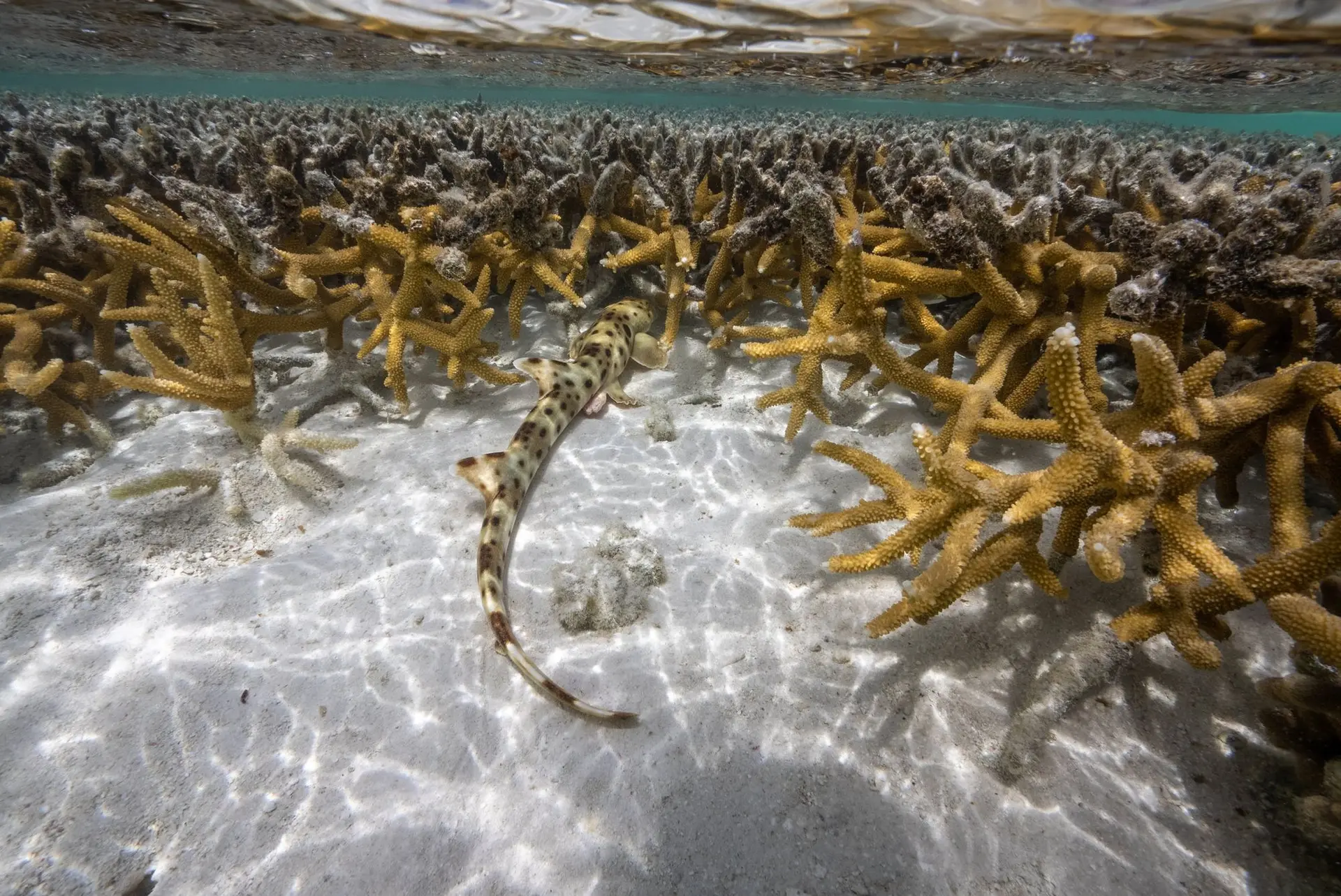
If scientists only count the number of sharks caught in fishing nets, they overlook the invisible physiological stressors preventing populations from replenishing. This mirrors what RummerLab researchers refer to as the "Wolverine Effect." While baby sharks can heal rapidly from physical injuries, doing so in an increasingly warming ocean exacts an immense, unseen metabolic cost. If researchers only document the healed scar without measuring the shark's metabolic rate, they miss the reality that the animal is slowly starving.
This siloing of data becomes especially dangerous when evaluating synergistic threats. According to the IUCN Red List, roughly 33 percent of threatened shark species are battling overlapping threats—facing overfishing, habitat degradation, and climate change simultaneously. It is akin to a boxer fighting three opponents at once.
Despite this reality, the AI found zero correlation between Ecotoxicology and any other key threat topic, and only weak links between fisheries research and environmental change studies.
From Contextualization to Integration
Why does the scientific community compartmentalize its research? Often, it comes down to academia's structural incentives. Historically, funding agencies have not always rewarded the vast complexity required to field highly interdisciplinary teams of geneticists, physiologists, spatial ecologists, and sociologists on a single grant. Furthermore, research trends tend to follow the "shiny new tool." The literature shows a boom in growth studies during the 1990s and a massive spike in genetics research in the 2010s as genomic sequencing became more accessible.
But as tools mature, the low-hanging fruit is harvested. To answer the most pressing questions of the Anthropocene ocean, researchers must shift from contextualization to integration.
Contextualization is conducting a physiological experiment in a laboratory and casually mentioning its potential fisheries applications in the discussion section of a paper. Integration, by contrast, requires scientists to collaborate directly with policymakers and fisheries managers from day one. It means measuring the sublethal stress of climate change, linking it to population structures, and designing spatial management plans that account for all variables simultaneously.
The red strings of shark science are out there, but they will not connect themselves. By shining an AI-driven light on both the triumphs and the blind spots of marine conservation, this research provides a vital roadmap for the future. Healthy sharks are the bedrock of healthy reefs and a healthy ocean—and protecting them requires us to break down our scientific silos and embrace the full, complex picture of marine life.
To learn more about the ongoing research into the physiological resilience of sharks and to support the lab's mission, visit the RummerLab donation page.